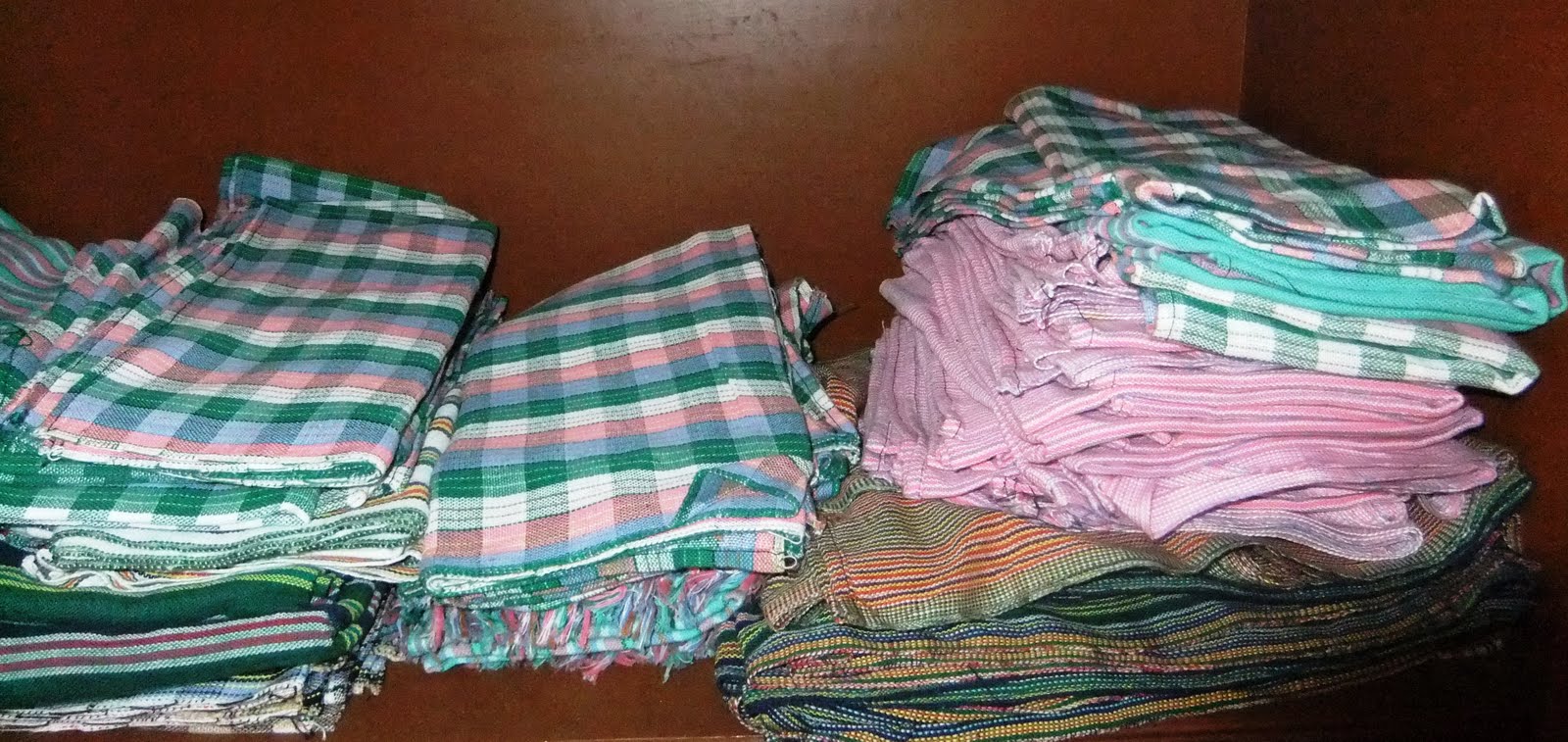
The young adultsof AIKYA are churning out new products from their workshop in Raja Annamalaipuram, Chennai. They make areca leaf plates, towels, phenyl, computer incense, garlands, gift cards, flowers, bracelets, and anklets. The price ranges from Rs.15 to Rs. 80. Have a look at the products and call 9444960643 or mail info@aikya.org
AIKYA helps to promote the welfare and interests of children with Autism, ADHD, Down Syndrome and specific learning disabilities. To improve the support these children receive, AIKYA provides a wide range of materials for teachers, parents and others who work with children with special needs. We hope this blog will be a valuable resource for parents, schools, teachers, and professionals.
Search This Blog
Tuesday, September 6, 2011
New Products made by the young adults of AIKYA
AIKYA Founder Parvathy Viswanath about her son Prabhakar
Parvathy Viswanath explains how her son overcame his disability and is working in the mainstream now. He won a President Award for being a Role Model to special children.
Labels:
AIKYA,
Down Syndrome,
Parvathy Viswanath,
special children
Wednesday, February 9, 2011
Event - Chennai Olympics
We are organizing a mega sports event “Chennai Olympics 2011” for children with Special Needs on March 12, 2011 at YMCA, Chennai. AIKYA is an organization dedicated to promoting Sports for Children with Intellectual Disabilities as one of the objectives and has organized similar events earlier and the guests have been prominent sports persons like Krishnamachari Srikanth and Mr.Vijay Amrith Raj.
AIKYA is dedicated to the educational needs of children and young adults with with Autism, ADHD, DS and Learning Disabilities. Lions Club of Padi Shenoy Nagar is a service organization well known in the city for their services for several decades. Chennai Olympics is jointly organized by AIKYA, L.C.Padi Shenoy Nagar and North Chennai District Parents Association.
Significance of Chennai Olympics ?
Chennai Olympics aims to empower children with special needs through Sports.
Sport and games give the opportunity and the necessary space to children with disabilities to find new ways of dealing with the challenges of daily life. In safe surroundings, mistakes do not carry any serious consequences. All innovative initiatives are appreciated and nobody needs to be afraid of sanctions. The trainers encourage learning from all experiences. Children’s self-esteem increases and they get more and more self-confident as they learn how to prepare a game, to adapt the rules to specific needs if necessary, to organise the team and to take over an individual role. During the game they concentrate on a specific goal, sense the team spirit and experience competition as a challenge and not as a threat.With growing self-esteem and self-confidence children with disabilities feel encouraged to try and find an active place in society.
Around 1000 children from various Institutions are participating in the Sports meet this time.These children will display their extraordinary determination and ability in Athletics and various team games.
AIKYA is dedicated to the educational needs of children and young adults with with Autism, ADHD, DS and Learning Disabilities. Lions Club of Padi Shenoy Nagar is a service organization well known in the city for their services for several decades. Chennai Olympics is jointly organized by AIKYA, L.C.Padi Shenoy Nagar and North Chennai District Parents Association.
Significance of Chennai Olympics ?
Chennai Olympics aims to empower children with special needs through Sports.
Sport and games give the opportunity and the necessary space to children with disabilities to find new ways of dealing with the challenges of daily life. In safe surroundings, mistakes do not carry any serious consequences. All innovative initiatives are appreciated and nobody needs to be afraid of sanctions. The trainers encourage learning from all experiences. Children’s self-esteem increases and they get more and more self-confident as they learn how to prepare a game, to adapt the rules to specific needs if necessary, to organise the team and to take over an individual role. During the game they concentrate on a specific goal, sense the team spirit and experience competition as a challenge and not as a threat.With growing self-esteem and self-confidence children with disabilities feel encouraged to try and find an active place in society.
Around 1000 children from various Institutions are participating in the Sports meet this time.These children will display their extraordinary determination and ability in Athletics and various team games.
Autism and ADHD
What parents should know
IT USED to be that when a little boy or girl is too aggressive and hyperactive, or too timid or not interactive enough, parents would dismiss this as just part of the child’s developmental years. But what if the hyperactivity becomes too annoying or the non-interactivity becomes too alarming, when should a parent worry?
Despite recent studies released publicly on developmental disabilities that affect children, parents remain clueless on the red flag signs that their child is indeed suffering from a developmental condition. Among the most prevalent conditions today – Autism and Attention Deficit Hyperactivity Disorder or ADHD – continue to challenge not only the children suffering from them, but more so their parents who are at a loss as to how they would help their children cope with such developmental conditions.
"The challenge to help children with autism or ADHD live quality lives depends on their parents. By learning about their child’s condition and the latest treatments available today, and giving their full love, understanding, patience and support to the child, individuals with autism or ADHD can even become productive citizens of society."
Among the red flag signs of Autism that parents may observe are as follows: Lack of warm, joyful expressions by six months or thereafter; no back-and-forth sharing of sounds, smiles, or other facial expressions by nine months and thereafter; no babbling or back-and-forth gestures like pointing, showing, reaching or waving by age 12 months; no words by 16 months; no two-word meaningful phrases without imitating or repeating by two years old; and loss of speech or babbling or social skills at any age. Autism is described as a neurodevelopmental condition characterized by impairment of verbal and non-verbal communication, reciprocal social interaction and imaginative activity.
Signs of ADHD on the other hand – which is characterized by inattention, hyperactivity and impulsivity – include lack of focused attention or showing more interest on exciting graphics, bright colors, or flashing lights; general lack of self-control and accident proneness; difficulty in turn taking during play; restlessness; and excess overt motor activity such as excessive talking, humming or making noise.
Such red flags can be overwhelming for parents, but it is extremely important to recognize that the child might need medical help rather than succumb in denial and extend punishment on the child or letting him be absorbed in his own world.: "There’s no specific cure but there are treatment and intervention program options available to help children with autism or ADHD cope with their condition. Studies show that outlook for most children who receive treatment for ADHD or autism is encouraging, especially if intervention programs are started early enough.
What is important is that parents should seek help to fully understand their child’s condition and how they can help their child reach his full potential despite his condition. Treatment given to the child must be tailored to suit the child’s special needs, while providing a multi-disciplinary approach to cover a wider range of developmental and behavioral services that the child needs
IT USED to be that when a little boy or girl is too aggressive and hyperactive, or too timid or not interactive enough, parents would dismiss this as just part of the child’s developmental years. But what if the hyperactivity becomes too annoying or the non-interactivity becomes too alarming, when should a parent worry?
Despite recent studies released publicly on developmental disabilities that affect children, parents remain clueless on the red flag signs that their child is indeed suffering from a developmental condition. Among the most prevalent conditions today – Autism and Attention Deficit Hyperactivity Disorder or ADHD – continue to challenge not only the children suffering from them, but more so their parents who are at a loss as to how they would help their children cope with such developmental conditions.
"The challenge to help children with autism or ADHD live quality lives depends on their parents. By learning about their child’s condition and the latest treatments available today, and giving their full love, understanding, patience and support to the child, individuals with autism or ADHD can even become productive citizens of society."
Among the red flag signs of Autism that parents may observe are as follows: Lack of warm, joyful expressions by six months or thereafter; no back-and-forth sharing of sounds, smiles, or other facial expressions by nine months and thereafter; no babbling or back-and-forth gestures like pointing, showing, reaching or waving by age 12 months; no words by 16 months; no two-word meaningful phrases without imitating or repeating by two years old; and loss of speech or babbling or social skills at any age. Autism is described as a neurodevelopmental condition characterized by impairment of verbal and non-verbal communication, reciprocal social interaction and imaginative activity.
Signs of ADHD on the other hand – which is characterized by inattention, hyperactivity and impulsivity – include lack of focused attention or showing more interest on exciting graphics, bright colors, or flashing lights; general lack of self-control and accident proneness; difficulty in turn taking during play; restlessness; and excess overt motor activity such as excessive talking, humming or making noise.
Such red flags can be overwhelming for parents, but it is extremely important to recognize that the child might need medical help rather than succumb in denial and extend punishment on the child or letting him be absorbed in his own world.: "There’s no specific cure but there are treatment and intervention program options available to help children with autism or ADHD cope with their condition. Studies show that outlook for most children who receive treatment for ADHD or autism is encouraging, especially if intervention programs are started early enough.
What is important is that parents should seek help to fully understand their child’s condition and how they can help their child reach his full potential despite his condition. Treatment given to the child must be tailored to suit the child’s special needs, while providing a multi-disciplinary approach to cover a wider range of developmental and behavioral services that the child needs
Sunday, February 6, 2011
Yoga
Many of us have felt the magic of yoga.,the powers of yoga and I personally have learnt and practice Yoga..Knowing the benefits of Yoga, I tried to use Yoga as therapy to my special kids at AIKYA for whom I have dedicated my life.We were quite successful in teaching them the asanas.The benefits were huge. Our experiences over the last 19 years teaching yoga to special kids has been extremely rewarding.
Students of AIKYA perform a series of balanced Yoga after training in Yoga and it is unbelivable to watch the most hyperactive kids performing difficult asanas with ease at stage.
Many of the students with special needs have one or many sensory deficits. They have difficulty integrating the information from their eyes, ears, hands, and body. They may not move easily and appear clumsy. Most learning problems are the result of poor sensory integration of all these systems. Each child demonstrates a different set of symptoms. Their nervous system is working an irregular way and they tend to have disorganized response to their environment. We have integrated yoga into the sessions of children with various diagnoses with positive results. Anyone can maximize his or her potential from consistent practice of yoga and these children are no exception. Yoga calms the physical body and once that occurs, the mind can quiet. Gradually, a child becomes more organized and focused. Yoga enhances flexibility has a positive effect on gross, fine, visual motor conditions. It also promotes strength and self-esteem and encourages a gentle spirit.
Students of AIKYA perform a series of balanced Yoga after training in Yoga and it is unbelivable to watch the most hyperactive kids performing difficult asanas with ease at stage.
Many of the students with special needs have one or many sensory deficits. They have difficulty integrating the information from their eyes, ears, hands, and body. They may not move easily and appear clumsy. Most learning problems are the result of poor sensory integration of all these systems. Each child demonstrates a different set of symptoms. Their nervous system is working an irregular way and they tend to have disorganized response to their environment. We have integrated yoga into the sessions of children with various diagnoses with positive results. Anyone can maximize his or her potential from consistent practice of yoga and these children are no exception. Yoga calms the physical body and once that occurs, the mind can quiet. Gradually, a child becomes more organized and focused. Yoga enhances flexibility has a positive effect on gross, fine, visual motor conditions. It also promotes strength and self-esteem and encourages a gentle spirit.
Census 2011 - Very Important
Census 2011
Disability and Census 2011
Why do persons with disability need to be counted?
For decades after our independence, there was no serious effort to actually count how many of us have any disability. As we know, all our government's plans and budgets, rules and regulations and policies are built upon the census data. It is therefore inevitable to have factual figures about the number of persons with disability to demand for their due share in government development progammes.
The first time that persons with disability were seriously included in the census was in the year 2001 and it showed that 2.13 per cent of India’s population has a disability. This is against the estimated figures by the World Health Organization (WHO) - anywhere between 5-10 %. In the forthcoming census 2011, the government of India has promised to enumerate the persons with disability with more accuracy and with broader definition. Let us join together for this noble cause and ensure that each person with disability is counted.
When is the population enumeration?
From 9th to 28th February 2011
Who are the enumerators?
Local schoolteachers or Anganwadi workers or ANMs (Auxiliary Nurse Midwife) will be visiting your family to count family members.
Is there a separate question to enumerate disabled persons in the census survey form?
Yes. In the Census form Question No.9 is exclusively meant for the person with disabilities. However, it is to be noted that all the 30 questions in the census form should be answered by family members also having persons with disability (who live in that family) in mind.
Is it necessary to produce proof to verify my disability?
No proof is necessary to verify disability. Anyone experiencing any impairment or disability mentioned
in question no.9 is counted as a disabled person, irrespective of his or her disability and age. No one
needs to produce medical certificate or National ID card or any other document to the people
conducting the census to verify or to prove disability. The 40% disability criteria for entitlements to
Govt. benefits do not apply here.
How is the census information used by the Govt.?
The Census information can be used by the Govt. only for the purpose of planning. None of the
information from the Census can be used for any other purpose against any person. The information
provided by the citizens of India in the Census is strictly confidential by law.
If any one has any grievance in the Census process he/she should contact the state Census Officer.
Question – 9: Disability
Q. 9: Disability
9 (a) is this person
mentally/physically disabled?
Yes– 1/ No- 2
9 (b) If ‘YES’ in 9 (a), give code in
the box against 9 (b) from the list
below:
9 (c) If multiple disability (Code 8) in
9 (b), give maximum three codes in
the boxes against 9 (c) from the list
below:
9(a)
9 (b)
9 (c)
Type of Disability Code
1. In Seeing 1
2. In Hearing 2
3. In Speech 3
4. In Movement 4
5. Mental Retardation 5
6. Mental Illness 6
7. Any Other 7
8. Multiple Disability 8
Disability and Census 2011
Why do persons with disability need to be counted?
For decades after our independence, there was no serious effort to actually count how many of us have any disability. As we know, all our government's plans and budgets, rules and regulations and policies are built upon the census data. It is therefore inevitable to have factual figures about the number of persons with disability to demand for their due share in government development progammes.
The first time that persons with disability were seriously included in the census was in the year 2001 and it showed that 2.13 per cent of India’s population has a disability. This is against the estimated figures by the World Health Organization (WHO) - anywhere between 5-10 %. In the forthcoming census 2011, the government of India has promised to enumerate the persons with disability with more accuracy and with broader definition. Let us join together for this noble cause and ensure that each person with disability is counted.
When is the population enumeration?
From 9th to 28th February 2011
Who are the enumerators?
Local schoolteachers or Anganwadi workers or ANMs (Auxiliary Nurse Midwife) will be visiting your family to count family members.
Is there a separate question to enumerate disabled persons in the census survey form?
Yes. In the Census form Question No.9 is exclusively meant for the person with disabilities. However, it is to be noted that all the 30 questions in the census form should be answered by family members also having persons with disability (who live in that family) in mind.
Is it necessary to produce proof to verify my disability?
No proof is necessary to verify disability. Anyone experiencing any impairment or disability mentioned
in question no.9 is counted as a disabled person, irrespective of his or her disability and age. No one
needs to produce medical certificate or National ID card or any other document to the people
conducting the census to verify or to prove disability. The 40% disability criteria for entitlements to
Govt. benefits do not apply here.
How is the census information used by the Govt.?
The Census information can be used by the Govt. only for the purpose of planning. None of the
information from the Census can be used for any other purpose against any person. The information
provided by the citizens of India in the Census is strictly confidential by law.
If any one has any grievance in the Census process he/she should contact the state Census Officer.
Question – 9: Disability
Q. 9: Disability
9 (a) is this person
mentally/physically disabled?
Yes– 1/ No- 2
9 (b) If ‘YES’ in 9 (a), give code in
the box against 9 (b) from the list
below:
9 (c) If multiple disability (Code 8) in
9 (b), give maximum three codes in
the boxes against 9 (c) from the list
below:
9(a)
9 (b)
9 (c)
Type of Disability Code
1. In Seeing 1
2. In Hearing 2
3. In Speech 3
4. In Movement 4
5. Mental Retardation 5
6. Mental Illness 6
7. Any Other 7
8. Multiple Disability 8
Sunday, January 23, 2011
Job opportunities
Avail Job opportunities :
Nature of the work : assembling of electrical switchboards
Qualification : 10th pass / fail
work place : Ambattur ( renouned electrical company )
Salary : Rs.4700/- tea and lunch ( lunch for very nominal payment)
Age : 18-24 yrs open to boys and girls
For details contact us @9444960643
Nature of the work : assembling of electrical switchboards
Qualification : 10th pass / fail
work place : Ambattur ( renouned electrical company )
Salary : Rs.4700/- tea and lunch ( lunch for very nominal payment)
Age : 18-24 yrs open to boys and girls
For details contact us @9444960643
Thursday, January 20, 2011
Vocational training for young adults
The following courses are offered
Tailoring
Computer
Weaving
Jwellery making
Food products
Detergents
Areca Leaf plates
Teacher Aid training
Contact : 9444960643 / info@aikya.org
Tailoring
Computer
Weaving
Jwellery making
Food products
Detergents
Areca Leaf plates
Teacher Aid training
Contact : 9444960643 / info@aikya.org
Diploma in Multimedia for slow Learners
Started an initiative for slow learners. University recognised diploma in multimedia. one year course.Weekday evenings / week end classes.
Call 9444960643 for details
Tuesday, November 16, 2010
Early Identification and Intervention
The birth of a child is an exciting, life-changing event. A beautiful new baby comes to your house, family, and neighborhood. It is a time for celebration. Family members look at the new child and wonder: Will he be a football star, will she be a famous musician, will he discover the cure for cancer, will she become President of the United States?
But what happens when this new child has a disability? What if there are health problems? What if, as time goes by, it seems as if the child isn't learning and progressing as quickly or easily as other children?
In fact, there are many supports available for infants, toddlers, and preschoolers with disabilities. Services for very young children, from birth through age two, are called Early Intervention. Early intervention is an effective way to help children catch up or address specific developmental concerns as soon as possible in their lives. To learn more about these vital services, explore the topics below.
Broadly speaking, early intervention services are specialized health, educational, and therapeutic services designed to meet the needs of infants and toddlers, from birth through age two, who have a developmental delay or disability, and their families. At the discretion of each State, services can also be provided to children who are considered to be at-risk of developing substantial delays if services are not provided.
Sometimes it is known from the moment a child is born that early intervention services will be essential in helping the child grow and develop. Often this is so for children who are diagnosed at birth with a specific condition or who experience significant prematurity, very low birth weight, illness, or surgery soon after being born. Even before heading home from the hospital, this child’s parents may be given a referral to their local early intervention office.
Overview of Early Intervention
Some children have a relatively routine entry into the world, but may develop more slowly than others, experience set backs, or develop in ways that seem very different from other children. For these children, a visit with a developmental pediatrician and a thorough evaluation may lead to an early intervention referral, as well. However a child comes to be referred, assessed, and determined eligible—early intervention services provide vital support so that children with developmental needs can thrive and grow.
What areas of child development are Early Intervention services designed to address?
In a nutshell, early intervention is concerned with all the basic and brand new skills that babies typically develop during the first three years of life, such as:
physical (reaching, rolling, crawling, and walking)
cognitive (thinking, learning, solving problems);
communication (talking, listening, understanding);
social/emotional (playing, feeling secure and happy); or,
self-help (eating, dressing).
But what happens when this new child has a disability? What if there are health problems? What if, as time goes by, it seems as if the child isn't learning and progressing as quickly or easily as other children?
In fact, there are many supports available for infants, toddlers, and preschoolers with disabilities. Services for very young children, from birth through age two, are called Early Intervention. Early intervention is an effective way to help children catch up or address specific developmental concerns as soon as possible in their lives. To learn more about these vital services, explore the topics below.
Broadly speaking, early intervention services are specialized health, educational, and therapeutic services designed to meet the needs of infants and toddlers, from birth through age two, who have a developmental delay or disability, and their families. At the discretion of each State, services can also be provided to children who are considered to be at-risk of developing substantial delays if services are not provided.
Sometimes it is known from the moment a child is born that early intervention services will be essential in helping the child grow and develop. Often this is so for children who are diagnosed at birth with a specific condition or who experience significant prematurity, very low birth weight, illness, or surgery soon after being born. Even before heading home from the hospital, this child’s parents may be given a referral to their local early intervention office.
Overview of Early Intervention
Some children have a relatively routine entry into the world, but may develop more slowly than others, experience set backs, or develop in ways that seem very different from other children. For these children, a visit with a developmental pediatrician and a thorough evaluation may lead to an early intervention referral, as well. However a child comes to be referred, assessed, and determined eligible—early intervention services provide vital support so that children with developmental needs can thrive and grow.
What areas of child development are Early Intervention services designed to address?
In a nutshell, early intervention is concerned with all the basic and brand new skills that babies typically develop during the first three years of life, such as:
physical (reaching, rolling, crawling, and walking)
cognitive (thinking, learning, solving problems);
communication (talking, listening, understanding);
social/emotional (playing, feeling secure and happy); or,
self-help (eating, dressing).
Subscribe to:
Posts (Atom)